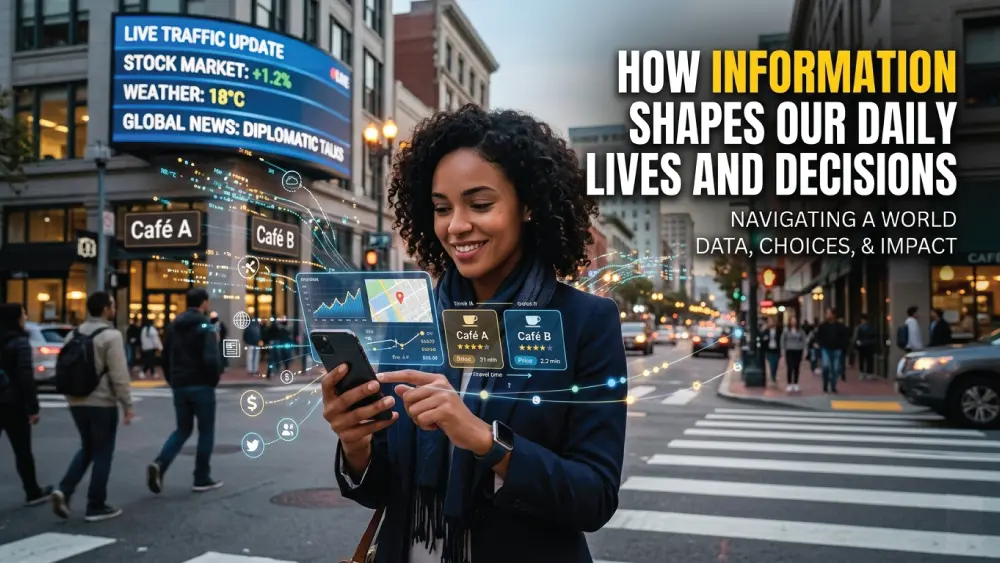
In today’s fast-paced digital world, information is everywhere. From the moment we wake up and check our phones to the decisions we make at work, in relationships, and even in our health routines-information plays a central role. Whether consciously or subconsciously, we rely on a constant flow of data, knowledge, and insights to guide our actions.
But how exactly does information influence our daily lives? And why is it more powerful today than ever before?
This comprehensive guide explores how information shapes our decisions, behaviors, and perspectives in an ever-evolving informational landscape.
Introduction: The Power of Information
Information is no longer just a resource-it’s a driving force behind modern life. In earlier times, access to knowledge was limited, but today, the internet has made information instantly available to billions of people.
From choosing what to eat to making financial investments, information influences every decision we make. Understanding how it works can help us make better, smarter, and more confident choices.
What Is Information in the Modern World?
Information refers to processed data that has meaning and relevance. In today’s context, it includes:
- News updates
- Social media content
- Educational resources
- Personal experiences
- Reviews and recommendations
The modern definition of information goes beyond facts-it includes opinions, interpretations, and even emotional cues.
The Role of Information in Daily Life
Information affects nearly every aspect of our daily routine. Let’s break it down:
Morning Decisions
- Checking weather updates to decide what to wear
- Reading news headlines to stay informed
Work and Productivity
- Using data to complete tasks
- Learning new skills online
Social Interactions
- Communicating through messages and social media
- Understanding trends and cultural norms
Health and Lifestyle
- Researching diets, workouts, and medical advice
- Tracking fitness data
In essence, information acts as a guide that shapes our daily behaviors and habits.
How Information Influences Decision-Making
Every decision we make is based on the information we have-or think we have.
Types of Decisions Influenced by Information
1. Personal Decisions
Choosing what to eat, wear, or buy based on available information.
2. Financial Decisions
Investments, savings, and spending habits depend heavily on market data and trends.
3. Professional Decisions
Career choices, job opportunities, and skill development rely on industry insights.
Key Insight
Better information leads to better decisions-but only if it is accurate and relevant.
Digital Age: Information Overload and Its Impact
While access to information is beneficial, too much of it can be overwhelming.
What Is Information Overload?
Information overload occurs when the amount of data exceeds our ability to process it effectively.
- Common Effects
- Decision fatigue
- Stress and anxiety
- Reduced productivity
- Confusion and indecisiveness
Example
Scrolling endlessly through social media can leave you feeling informed but mentally exhausted, making it harder to take meaningful action.
The Psychology Behind Information Processing
Our brains are powerful, but they have limitations.
How We Process Information
- We filter information based on relevance
- We rely on past experiences
- We use mental shortcuts (biases)
Cognitive Biases
Some common biases include:
- Confirmation Bias: Favoring information that supports existing beliefs
- Availability Bias: Relying on easily recalled information
- Anchoring Bias: Being influenced by the first piece of information
Understanding these biases helps us make more rational decisions.
Benefits of Being Well-Informed
Having access to accurate and useful information provides several advantages:
1. Better Decision-Making
You can evaluate options more effectively.
2. Increased Confidence
Knowledge reduces uncertainty and builds confidence.
3. Improved Problem-Solving
Information allows you to analyze situations and find solutions.
4. Personal Growth
Continuous learning enhances skills and broadens perspectives.
Platforms like Info Verse 360 emphasize the importance of staying informed through high-quality, ever-evolving informational content that adapts to modern needs.
Risks of Misinformation and Bias
Not all information is reliable. In fact, misinformation is one of the biggest challenges today.
Types of Misinformation
- Fake news
- Misleading headlines
- Outdated information
- Biased opinions presented as facts
Consequences
- Poor decision-making
- Increased confusion
- Social division
- Loss of trust
How to Identify Reliable Information
- Check the source
- Cross-verify with multiple platforms
- Look for evidence and data
- Avoid emotional manipulation
Practical Ways to Use Information Wisely
To make the most of information, you need a smart approach.
1. Be Selective
Focus on quality over quantity.
2. Verify Before You Trust
Always cross-check important information.
3. Limit Information Intake
Avoid unnecessary scrolling and distractions.
4. Take Notes and Reflect
Processing information actively improves retention.
5. Apply What You Learn
Information is only useful when put into action.
The Future of Information and Decision-Making
The role of information will continue to grow as technology evolves.
Emerging Trends
- Artificial Intelligence and personalized content
- Data-driven decision-making
- Real-time information access
- Smart assistants and automation
What It Means for You
You’ll need stronger critical thinking skills to navigate an increasingly complex information environment.
Staying updated through platforms like Info Verse 360 can help you adapt to these changes and remain informed in a rapidly evolving world.
Conclusion
Information is one of the most powerful forces shaping our daily lives and decisions. From simple choices to complex problem-solving, the quality and quantity of information we consume directly impact our outcomes.
However, with great access comes great responsibility. Learning how to filter, analyze, and apply information effectively is essential in today’s digital age.
By becoming more mindful of the information you consume, you can make smarter decisions, reduce stress, and improve your overall quality of life.
FAQs
Why is information important in daily life?
Information helps us make informed decisions, solve problems, and stay aware of our surroundings.
What is information overload?
It is a state where too much information makes it difficult to process and make decisions effectively.
How can I avoid misinformation?
Verify sources, cross-check facts, and avoid relying on a single source of information.
How does information affect decision-making?
It provides the basis for evaluating options and predicting outcomes.
What are cognitive biases in information processing?
They are mental shortcuts that can influence how we interpret and use information.
How can I use information more effectively?
Focus on reliable sources, limit distractions, and apply what you learn in real-life situations.