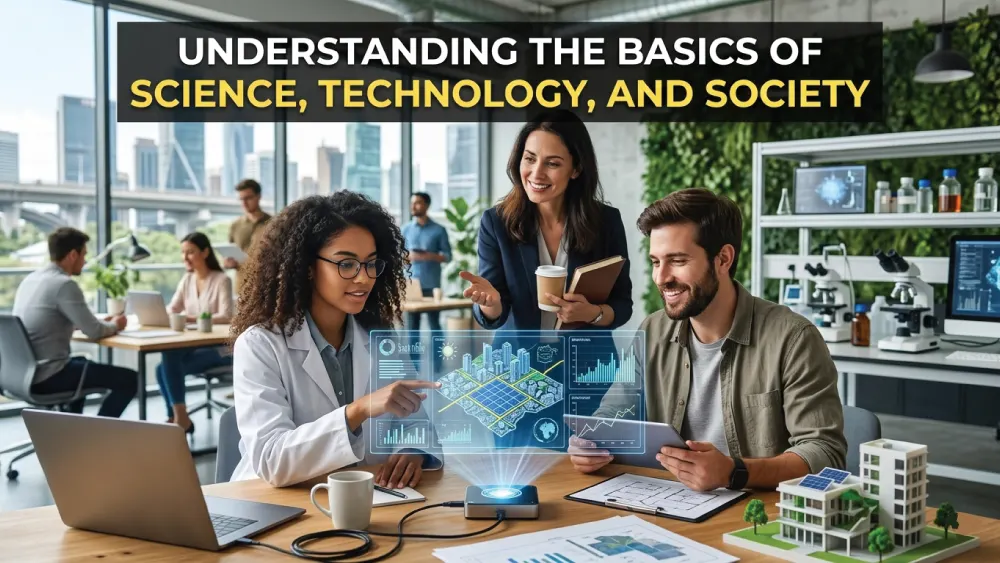
In today’s fast-paced world, the relationship between science, technology, and society has become more interconnected than ever before. From the way we communicate to how we solve global challenges, these three elements shape our everyday lives in profound ways. Understanding their fundamentals not only enhances awareness but also empowers individuals to make informed decisions in a rapidly evolving environment.
This comprehensive guide explores the core concepts, relationships, and impacts of science, technology, and society-helping readers grasp their importance in modern life.
Introduction to Science, Technology, and Society
Science, technology, and society (often abbreviated as STS) form a dynamic system that influences how humans live, think, and progress. Science provides knowledge, technology applies that knowledge, and society shapes and is shaped by both.
As an ever-evolving informational topic, STS continues to expand with advancements in artificial intelligence, biotechnology, and global connectivity-topics regularly explored by platforms like Info Verse 360, which focus on delivering insightful and up-to-date knowledge.
What Is Science?
Science is the systematic study of the natural world through observation, experimentation, and analysis. It seeks to answer fundamental questions about how things work.
Key Characteristics of Science:
- Evidence-based
- Testable and repeatable
- Constantly evolving
- Objective and logical
Branches of Science:
- Natural Sciences (Physics, Chemistry, Biology)
- Social Sciences (Psychology, Sociology, Economics)
- Formal Sciences (Mathematics, Logic)
Science helps us understand everything from the smallest particles to the vast universe.
What Is Technology?
Technology refers to the practical application of scientific knowledge to solve problems or improve human life.
Examples of Technology:
- Smartphones and computers
- Medical equipment like MRI machines
- Transportation systems such as electric vehicles
Key Features:
- Problem-solving tool
- Continuously evolving
- Enhances efficiency and productivity
Technology transforms theoretical scientific knowledge into real-world solutions.
Understanding Society
Society is a group of individuals who share a common culture, institutions, and social relationships.
Elements of Society:
- Culture and traditions
- Social institutions (education, government, family)
- Economic systems
- Communication networks
Society plays a critical role in shaping how science and technology are developed and used.
The Interconnection Between Science, Technology, and Society
The relationship between these three components is deeply intertwined:
Science to Technology
Scientific discoveries lead to technological innovations.
Example: Research in electricity led to the invention of electrical appliances.
Technology to Society
Technology changes how people live, work, and communicate.
Example: The internet revolutionized global communication.
Society to Science & Technology
Societal needs and values influence scientific research and technological development.
Example: Climate concerns drive renewable energy research.
This cyclical relationship ensures continuous growth and transformation.
Historical Evolution of STS
The interaction between science, technology, and society has evolved over time:
Ancient Era
- Basic tools and early scientific observations
- Development of agriculture and simple machines
Industrial Revolution
- Mechanization and mass production
- Rise of factories and urbanization
Modern Era
- Digital revolution
- Internet and artificial intelligence
Contemporary Era
- Focus on sustainability
- Advanced biotechnology and space exploration
Each phase demonstrates how advancements reshape society and vice versa.
Impact on Daily Life
Science and technology influence nearly every aspect of modern living:
Communication
- Social media platforms
- Instant messaging and video calls
Healthcare
- Advanced diagnostics
- Telemedicine services
Education
- Online learning platforms
- Digital classrooms
Transportation
- Faster and safer travel
- Electric and autonomous vehicles
Daily conveniences we often take for granted are products of STS interactions.
Role in Economic Development
Science and technology are key drivers of economic growth.
Contributions:
- Creation of new industries
- Job opportunities in tech sectors
- Increased productivity and efficiency
Countries investing in research and innovation often experience faster economic progress.
Ethical Considerations
While advancements bring benefits, they also raise ethical concerns:
Key Issues:
- Privacy and data security
- Artificial intelligence replacing jobs
- Environmental impact
- Genetic engineering debates
Balancing innovation with ethical responsibility is essential for sustainable growth.
Challenges in the Modern World
Despite progress, several challenges persist:
Digital Divide
Not everyone has equal access to technology.
Environmental Concerns
Industrialization contributes to pollution and climate change.
Information Overload
Excessive data can lead to confusion and misinformation.
Cybersecurity Threats
Increased reliance on technology raises security risks.
Addressing these challenges requires collaborative global efforts.
Future Trends and Innovations
The future of science, technology, and society looks promising yet complex.
Emerging Trends:
- Artificial Intelligence and Machine Learning
- Renewable Energy Technologies
- Space Exploration
- Biotechnology and Genetic Engineering
- Smart Cities and IoT (Internet of Things)
These innovations will continue to reshape human life in unprecedented ways.
Why Understanding STS Matters
Understanding STS is crucial for several reasons:
- Helps individuals make informed decisions
- Encourages critical thinking
- Promotes responsible use of technology
- Prepares society for future challenges
As highlighted by platforms like Info Verse 360, staying informed about these developments is essential in today’s knowledge-driven world.
Conclusion
Science, technology, and society are inseparable forces driving human progress. Their interaction shapes everything from daily routines to global advancements. By understanding their basics, individuals can better navigate modern life, contribute to meaningful discussions, and adapt to ongoing changes.
As this ever-evolving informational topic continues to grow, staying curious and informed remains the key to thriving in a technology-driven society.
FAQs
What is the relationship between science and technology?
Science generates knowledge, while technology applies that knowledge to create practical solutions.
Why is society important in STS?
Society influences what scientific research is prioritized and how technology is used.
How does technology impact daily life?
Technology improves communication, healthcare, education, and transportation, making life more efficient.
What are the ethical concerns in technology?
Issues include data privacy, job displacement due to automation, and environmental impact.
Why should we study science, technology, and society?
It helps us understand modern challenges, make informed decisions, and use technology responsibly.
What are future trends in STS?
Key trends include artificial intelligence, renewable energy, biotechnology, and smart cities.