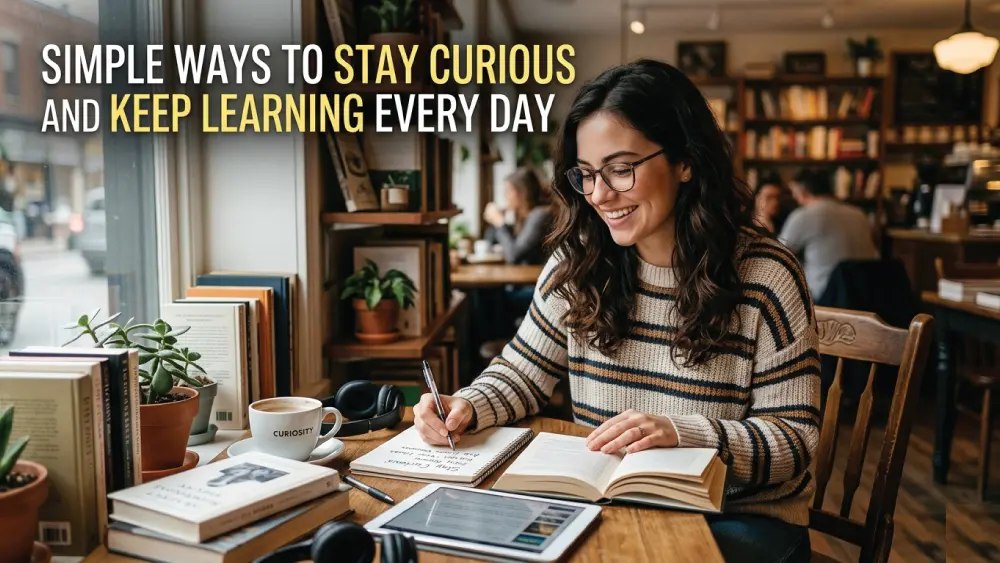
In a fast-changing world, curiosity is no longer just a personality trait-it’s a survival skill. The ability to keep learning every day helps you stay relevant, creative, and mentally active. Yet, many people struggle to maintain curiosity beyond school or formal education.
The good news? Staying curious doesn’t require massive effort or hours of study. Small, consistent habits can transform your daily routine into a powerful learning journey. This guide explores simple, practical ways to stay curious and keep learning every single day-without feeling overwhelmed.
Why Curiosity Matters in Everyday Life
Curiosity fuels growth. It pushes you to ask questions, explore ideas, and discover new perspectives. Without it, learning becomes passive and limited.
Here’s why curiosity is essential:
- Boosts creativity by connecting unrelated ideas
- Improves problem-solving skills
- Enhances memory and brain function
- Increases adaptability in changing environments
- Makes life more interesting and meaningful
Curious people tend to live more fulfilling lives because they see opportunities to learn everywhere.
The Science Behind Lifelong Learning
Research shows that the brain remains adaptable throughout life-a concept known as neuroplasticity. This means you can learn new skills, develop new habits, and expand your knowledge at any age.
When you stay curious:
- Your brain forms new neural connections
- Dopamine (the “feel-good” chemical) is released
- Learning becomes enjoyable instead of stressful
This is why curiosity-driven learning feels effortless compared to forced studying.
Simple Daily Habits to Stay Curious
You don’t need a strict schedule or expensive courses. Start with these easy habits:
1. Ask More Questions
Instead of accepting information as it is, ask:
- Why does this happen?
- How does this work?
- What if this changed?
Questions are the foundation of curiosity.
2. Read Something New Every Day
Even 10–15 minutes of reading can expand your knowledge.
- Articles
- Blogs
- Books
- News
Consistency matters more than quantity.
3. Watch Educational Content
Replace some entertainment time with learning:
Documentaries
Educational YouTube videos
Podcasts
4. Learn Something Small Daily
Focus on micro-learning:
- One new word
- One new fact
- One new concept
Small steps lead to big results over time.
5. Keep a Curiosity Journal
Write down:
- Interesting questions
- New ideas
- Things you want to explore
This keeps your mind actively engaged.
5. How to Turn Boredom into Learning Opportunities
Boredom is often seen as a negative state-but it can be a powerful trigger for curiosity.
Next time you feel bored:
- Observe your surroundings
- Think about how things work
- Explore random topics online
- Reflect on your thoughts
Instead of escaping boredom, use it as a gateway to discovery.
Building a Curiosity-Driven Mindset
Curiosity is not just about actions-it’s about mindset.
Embrace “Not Knowing”
Accept that you don’t know everything. This opens the door to learning.
Stay Open-Minded
Avoid rigid thinking. Be willing to explore new perspectives.
Challenge Assumptions
Don’t believe everything blindly. Question and verify.
Follow Your Interests
Curiosity grows naturally when you explore topics you enjoy.
Digital Tools That Support Daily Learning
Technology can either distract you or empower you-depending on how you use it.
Here are some tools to support curiosity:
- Learning apps for skill development
- Online courses for structured knowledge
- Podcasts for learning on the go
- Bookmark tools to save interesting content
Platforms like Info Verse 360 provide valuable knowledge, trivia, and evergreen content that keeps your curiosity alive daily.
Overcoming Common Barriers to Curiosity
Many people lose curiosity due to everyday challenges:
Lack of Time
Solution: Start with just 10 minutes a day.
Fear of Failure
Solution: Treat mistakes as learning opportunities.
Information Overload
Solution: Focus on one topic at a time.
Lack of Motivation
Solution: Build habits instead of relying on motivation.
Curiosity thrives when you remove these obstacles.
Creating a Sustainable Learning Routine
A good routine makes learning automatic.
Example Daily Routine:
- After brushing your teeth read an article
- During lunch break listen to a podcast
- After dinner watch an educational video
Keep it simple and repeatable.
Tips for Consistency:
- Set realistic goals
- Track your progress
- Reward yourself for consistency
- Avoid burnout by keeping it light
The Power of Evergreen Learning Content
Evergreen content is information that stays relevant over time. Unlike trends that fade, evergreen knowledge continues to provide value.
Examples include:
- Personal development
- Critical thinking
- Basic science concepts
- Communication skills
Learning from evergreen content ensures that your knowledge remains useful for years. Platforms like Info Verse 360 focus on delivering such timeless knowledge, helping readers stay informed and curious in an ever-changing world.
Conclusion
Curiosity is not something you either have or don’t-it’s something you build. By adopting simple daily habits, staying open-minded, and using the right resources, you can turn learning into a lifelong journey.
Remember, you don’t need to learn everything at once. Just stay curious, take small steps, and keep exploring. Over time, these small efforts will transform into a powerful habit that lasts forever.
FAQs
How can I stay curious every day?
Start by asking questions, reading daily, and exploring new topics regularly. Small habits make a big difference.
What are the best ways to build a learning habit?
Consistency is key. Set a routine, start small, and gradually increase your learning time.
Can curiosity be developed over time?
Yes, curiosity is a skill that can be developed through practice and mindful effort.
How much time should I spend learning daily?
Even 10–20 minutes a day is enough to build a strong learning habit.
What should I learn to stay curious?
Focus on topics that interest you, along with evergreen knowledge like communication, critical thinking, and general awareness.
How do I avoid losing motivation?
Don’t rely on motivation-build habits. Make learning simple, enjoyable, and part of your daily routine.